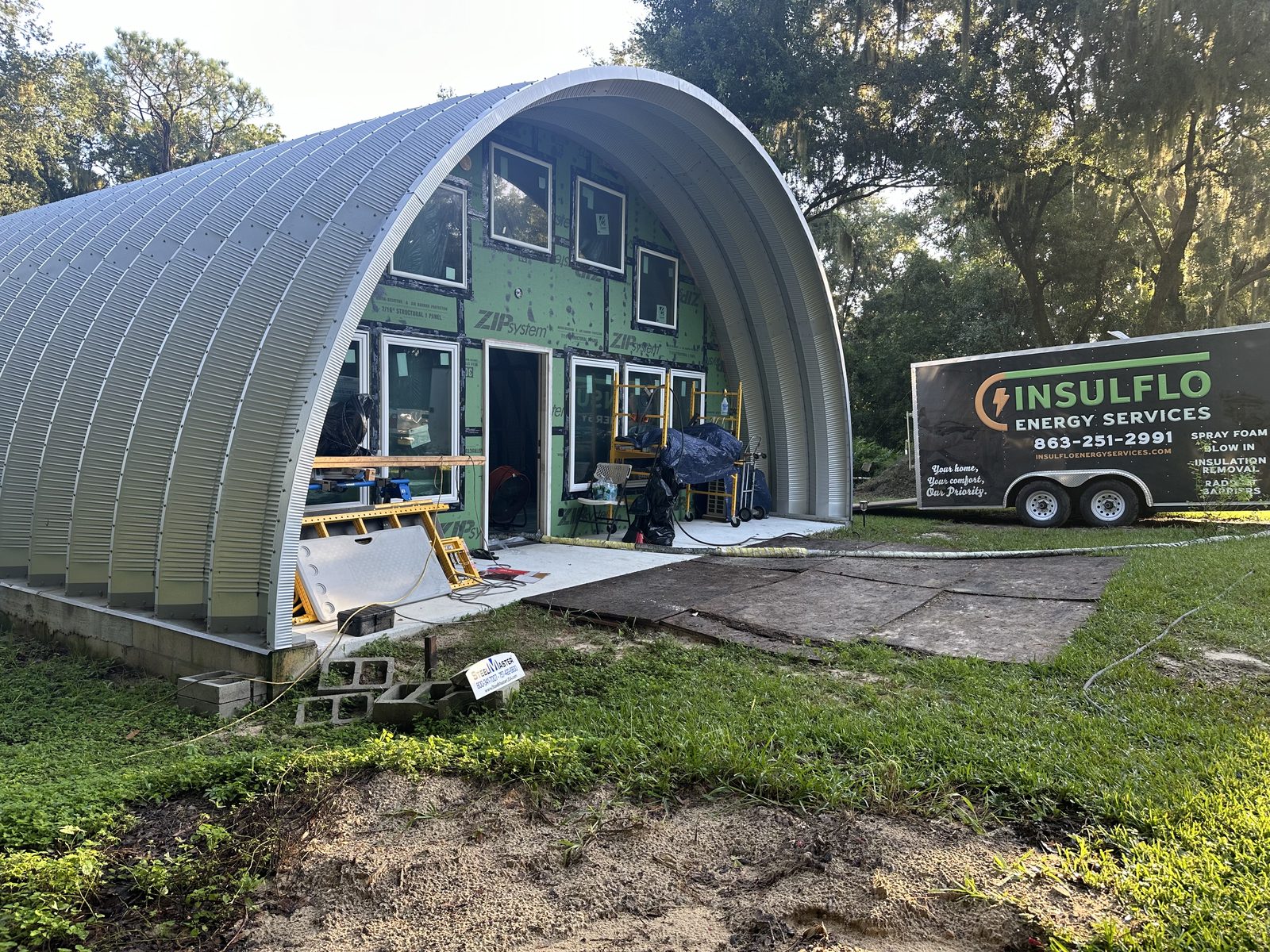
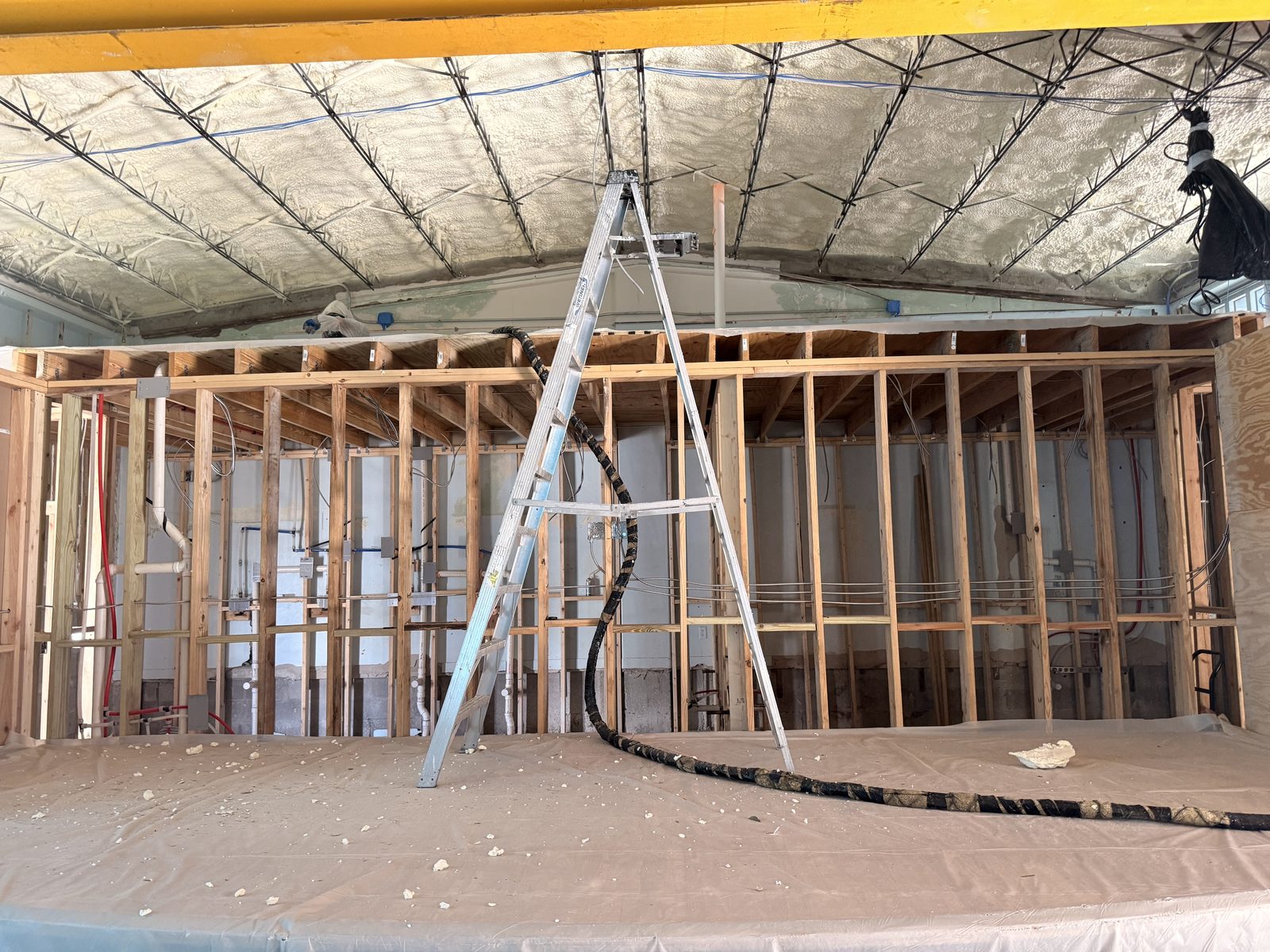
Most of the photographs below are spray foam — metal buildings, pole barns, workshops and outbuildings across Polk County and Tampa Bay. That is not an accident of what we happened to photograph. It is what a large share of the work here actually is, because a metal building in Central Florida is close to the hardest thing in the region to keep cool, and it is the job most contractors quote badly.
Why so many metal buildings
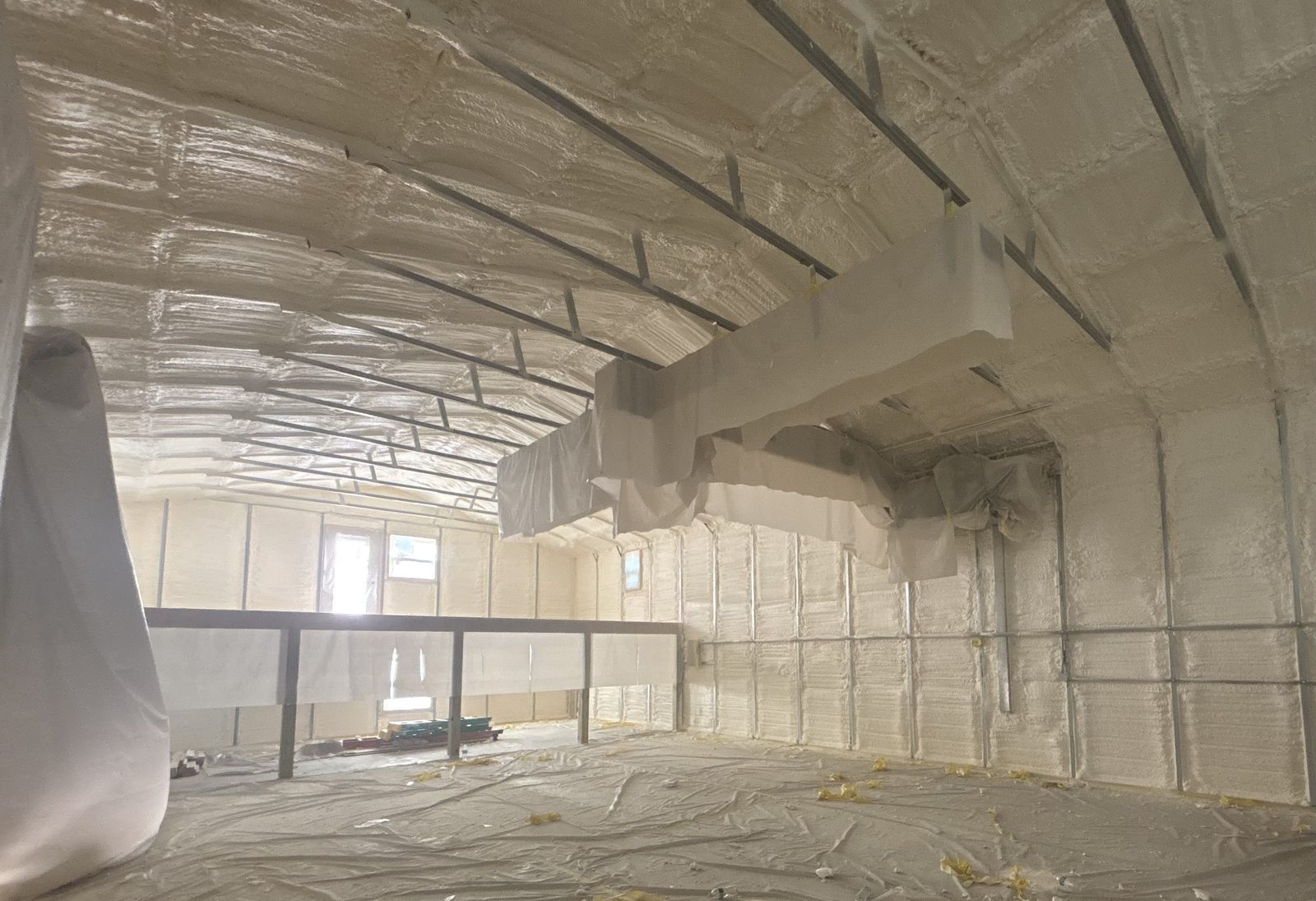
A steel roof and steel walls conduct heat straight through with almost nothing to slow it down, and the underside sweats when humid air meets a cold surface. Batts do not solve either problem: they sag away from the panel, they leave gaps at every purlin and girt, and the condensation carries on behind them. Closed-cell foam sprayed directly to the underside of the panel adheres to the steel, seals the assembly, and controls the condensation as well as the heat. That is why the shop, the barn and the workshop keep coming back to the same answer.
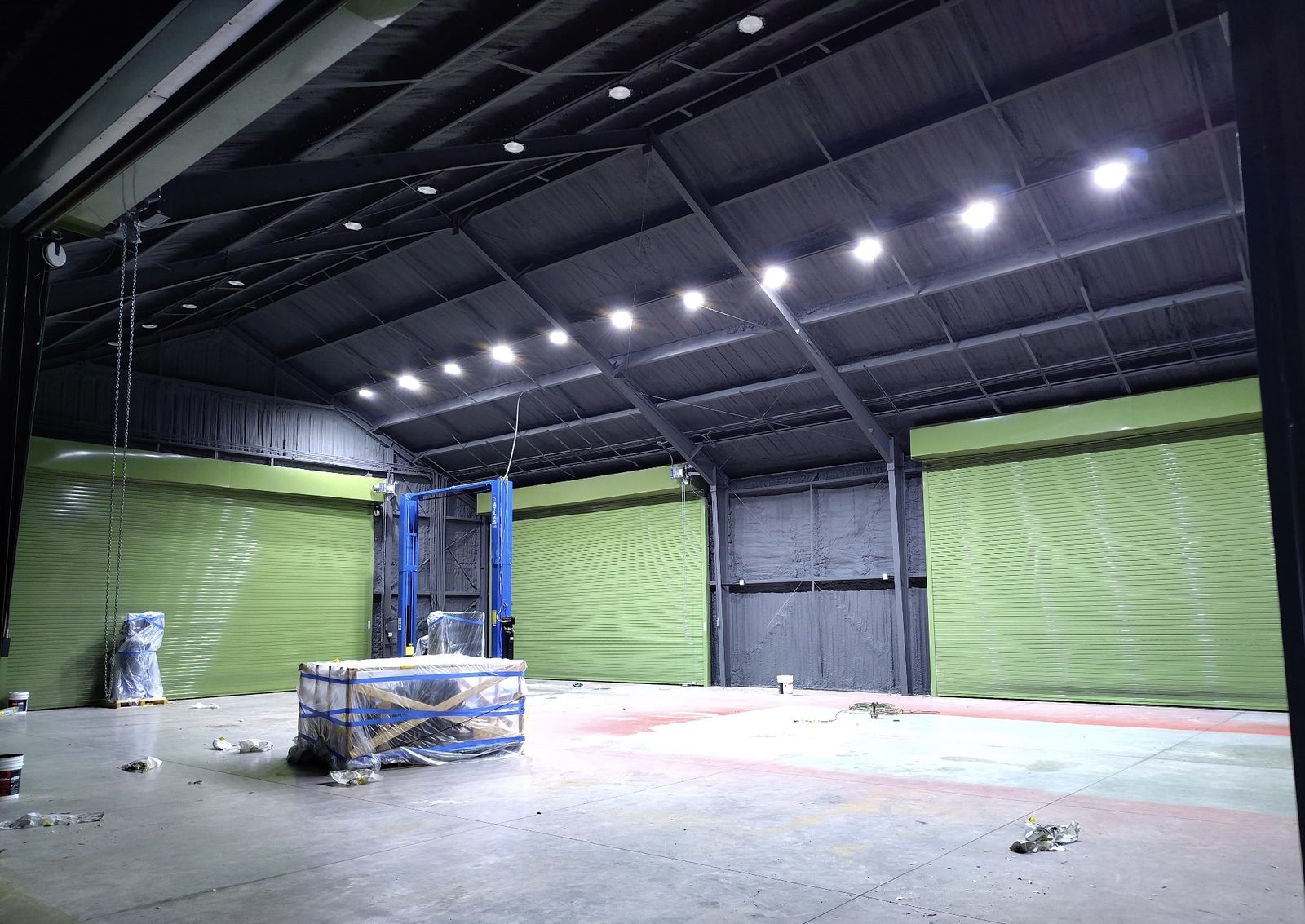
You will notice several of the commercial jobs have a black ceiling. That is the foam after coating — sprayed, then finished, which is standard on exposed installations where the surface is going to be looked at every day.
What you are actually looking at
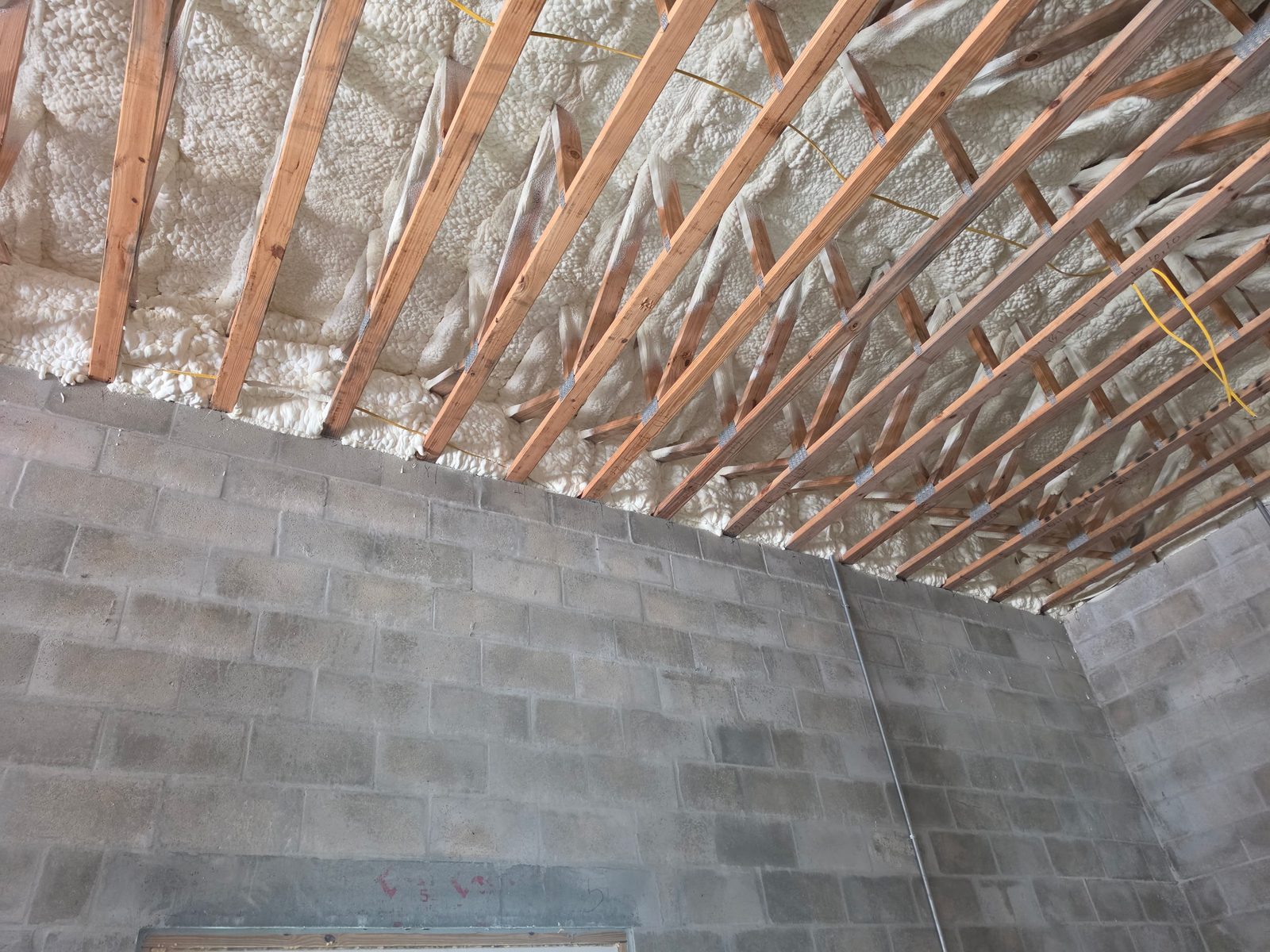
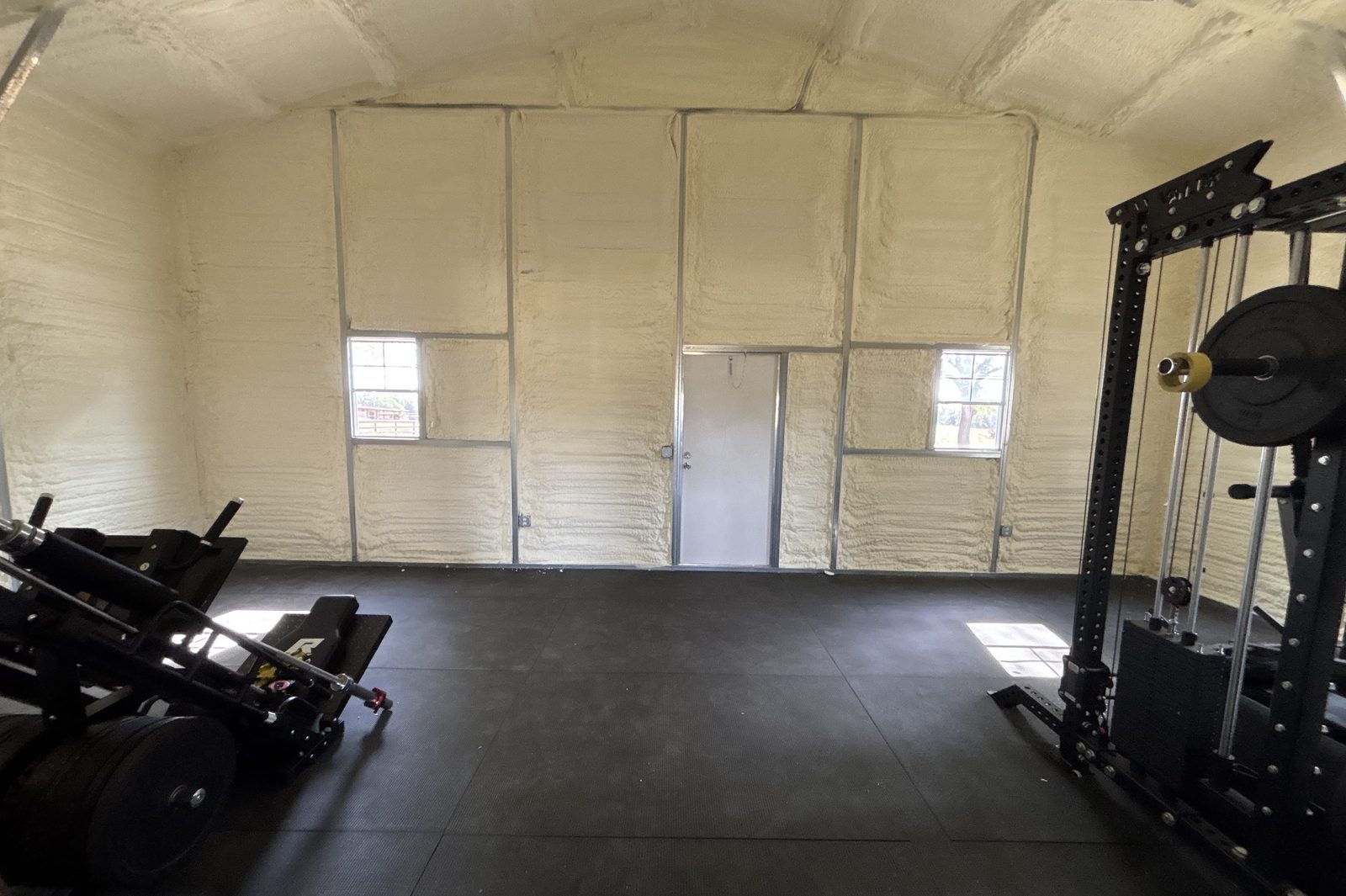
The close-up shots show the surface texture of closed-cell foam applied between rafters and against the roof deck. Even coverage and consistent thickness are the whole job — a thin patch is a thermal hole, and a run of foam that is too thick in one place and too thin in the next means the applicator was moving too fast. The wide shots are there so you can judge that across an entire building rather than in one flattering corner.
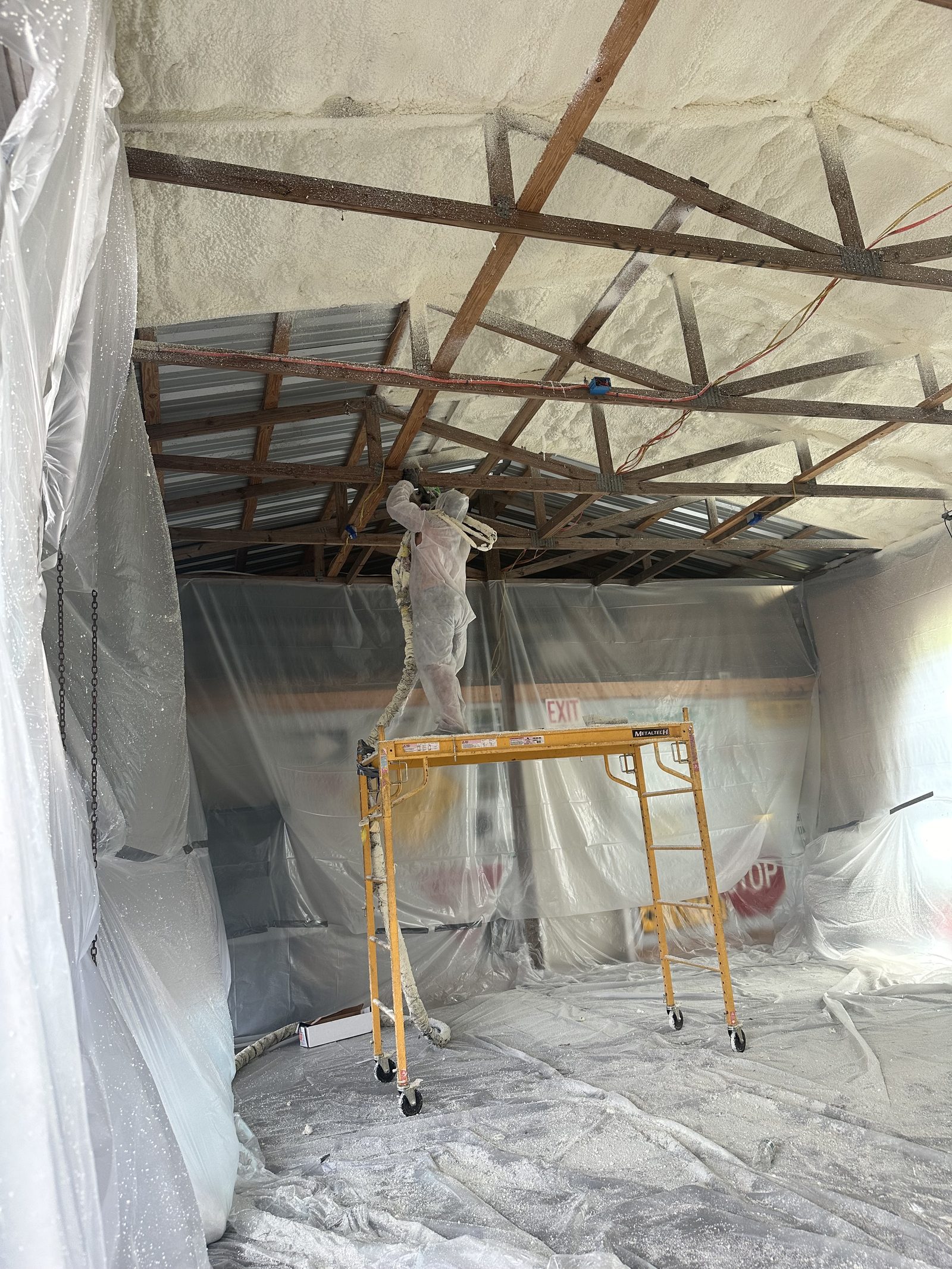
The photograph of our installer in a full protective suit and supplied-air respirator is worth a word too. Spray foam is a two-part chemical reaction applied at pressure, and while it is inert once cured, it is genuinely hazardous during application. Full PPE, ventilation and controlled re-entry times are not optional extras. If you are getting quotes and someone plans to spray your building in a t-shirt, that tells you what you need to know about the rest of their standards.
Residential, commercial and everything between
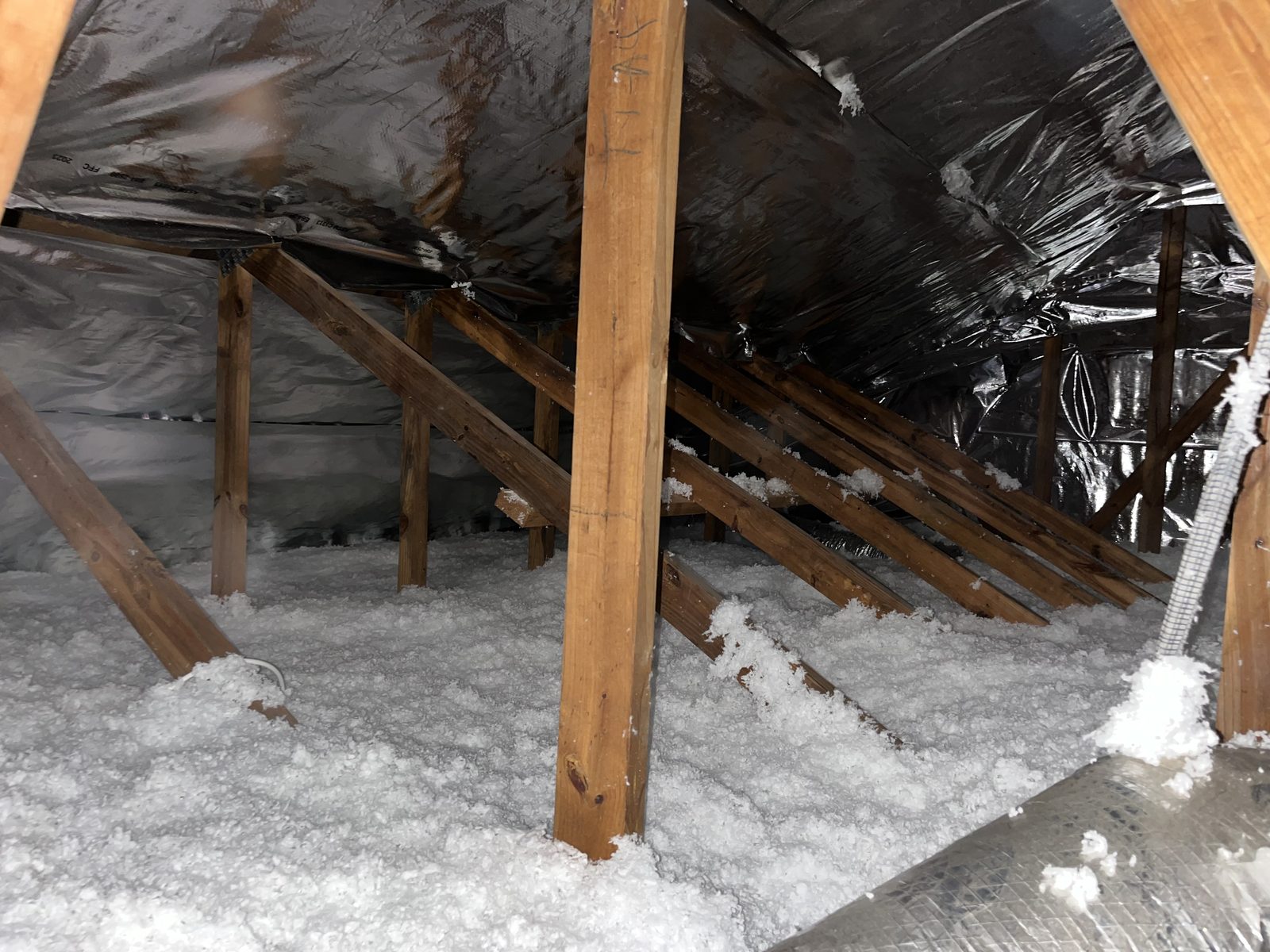
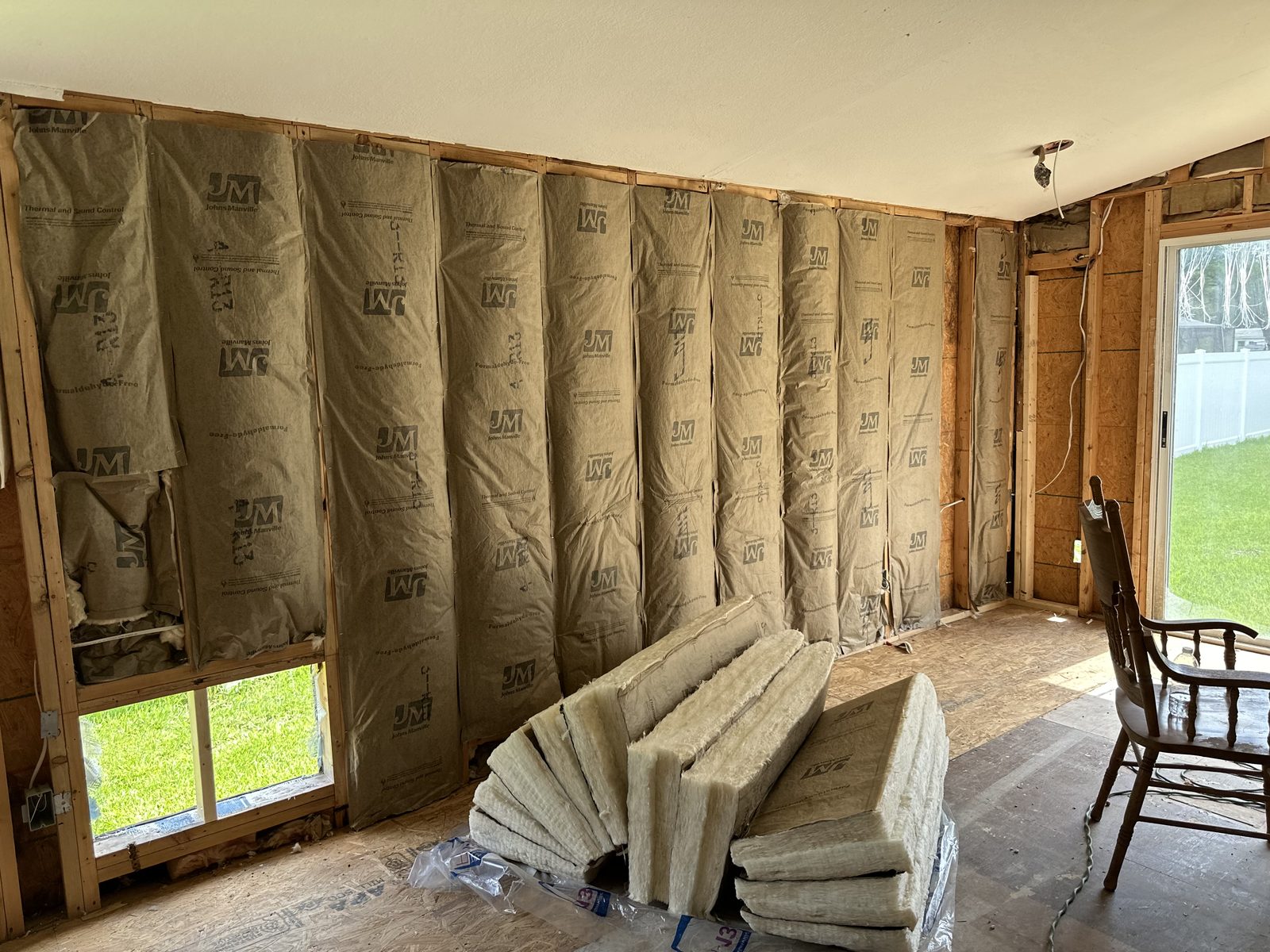
Alongside the metal buildings you will find wood-framed rooms with foam packed between studs, attic work in ordinary Central Florida homes, and outbuildings converted into usable, conditioned space. We work on houses, workshops, factories, warehouses, barndominiums and pole barns — anywhere that needs to be sealed against the heat.
An honest note about these photographs
These are phone photographs taken by the crew on real jobs. They are not staged, they are not stock, and nothing here is a rendering. Some of them have dust sheets and half-finished floors in shot, because that is what a working site looks like on the day. We would rather show you that than a catalogue image of somebody else's building.
If there is a specific type of job you want to see — an attic top-up, a removal, a window replacement, storm repair — call and ask. We can usually put our hands on photographs of something close to your situation, and it is a more useful conversation than a gallery.
Where we work
Insulflo Energy Services is family-owned and based in Lakeland, and the projects here come from across the service area — Lakeland, Winter Haven, Plant City, Lake Wales, Dade City, Brandon, Riverview, Tampa, St. Petersburg, Clearwater, Largo, Pinellas Park, Bradenton and Sarasota.
To talk about a project like these, see spray foam insulation or blown-in insulation, or request a free estimate. We will come and look before quoting anything.