Clearwater is a retrofit town. Pinellas County is essentially built out, with very little developable land left, so almost nothing here is new construction. More than half the housing stock predates 1980 and only about 7 percent was built after 2010. Whatever is in your attic has probably been there a very long time.
A 1978 median, and what that means
The single largest decade is the 1970s, at nearly 27 percent of all housing, followed by the 1980s at 19 percent. Around 56 percent of Clearwater homes predate 1980 and 75 percent predate 1990. By 1957 Clearwater was described as America’s fastest growing city, and Countryside Mall opening in 1975 anchored the north-east suburban wave that followed.
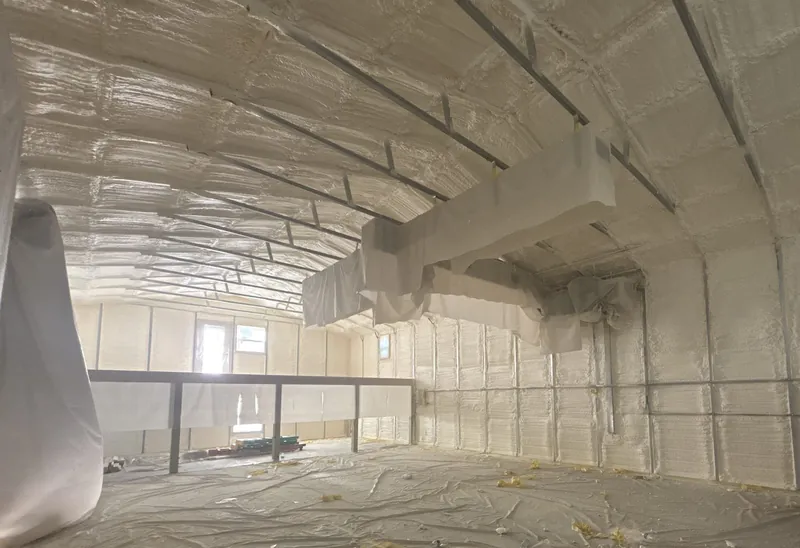
Practically, that means: concrete block walls with little or no insulation in them, attic insulation that was thin when it went in and has settled since, and — in the 1970s and 80s stock especially — ductwork running through an unconditioned attic. The Department of Energy recommends R-49 to R-60 for an uninsulated attic in this climate zone. Most of what we measure in Clearwater is a long way below that.
Two other features of the local stock. Only 38 percent of housing is single-family detached — Clearwater is unusually condo and apartment heavy — and mobile and manufactured homes make up over 5 percent, with a quarter of residents aged 65 or over. Manufactured homes fail differently, in the belly insulation and under-floor ducts, and Duke runs a separate rebate track for them.
Duke Energy rebates
Pinellas County is Duke Energy Florida territory, and Duke pays considerably better than the utilities inland. It also pays on windows, which most Florida utilities do not.
- Attic insulation: up to $800, applied as an instant credit on the contractor’s invoice rather than a rebate you claim afterwards.
- Energy-efficient windows: up to $800. The glazing has to meet a hot-climate specification, and the rebate applies to east, west and south-facing windows — not north-facing, and not sliding glass doors or French doors.
- Duct test and repair: up to $450, also instant.
- Heat pump water heater: up to $800. Total program value runs to roughly $3,800.
The order matters and it is where people lose the money. You must complete a free Home Energy Check — online, by phone or as a full in-home visit — and receive a qualifying recommendation before the work starts. You then have 24 months to complete it, and the installer has to be a Duke-approved contractor. Renters are eligible too. Duke completed 2,820 of these checks in Pinellas County in 2025, so it is a well-used program, not a technicality.
The attic rebate is tiered by how bad your existing insulation is, with the target being R-38 — which is also what the building code prescribes for new construction in this climate zone. If your attic already measures well, you will not qualify, and we would rather tell you that at the estimate than after.
Helene set a record here. Milton was a different storm.
It is worth being precise about these two, because they damaged Clearwater in opposite ways and the repairs differ.
Helene, 26 September 2024 — surge. The National Weather Service measured a peak water level of 6.67 feet above MHHW at Clearwater Beach, surpassing the previous site record of 4.02 feet set in the 1993 Storm of the Century. Peak gust 73 mph. Rainfall was only three to five inches — this was water from the Gulf, not the sky. Across Pinellas more than 29,000 homes and businesses were affected and over 17,000 were destroyed or majorly damaged. Twelve people died in the county, all surge drownings.
Milton, 9 October 2024 — wind and rain. Because it landed south at Siesta Key, the surge blew out rather than in; Clearwater Beach peaked at just 1.3 feet. But gusts hit 80 to 100 mph across Pinellas and Clearwater took eleven to thirteen inches of rain. Around 565 people were rescued from neck-deep water at one Clearwater apartment complex.
So: Helene flooded homes from below and ruined wall and floor insulation with saltwater. Milton damaged roofs and windows and soaked attic insulation from above, often with no visible flood line at all. Both require removal rather than drying — wet insulation in Florida humidity does not recover — but they present completely differently, and the second one is easier to miss.
Before committing to repairs, check the county’s 49 percent rule: if repair costs reach 49 percent of the structure’s value, the home is deemed substantially damaged and must be brought up to current floodplain code. The county counts donated materials and owner labor in that figure.
The beaches, the salt and the local utility question
Over a third of Clearwater’s area is water. Clearwater Beach, Sand Key, Island Estates and Carlouel sit directly on the Gulf or the Intracoastal, in constant salt aerosol that corrodes fasteners, flashing, soffit vents and window hardware. The city also runs a dedicated program for sunny day flooding and king tides in low-lying coastal neighborhoods, installing tidal valves to stop high-tide backflow — a reminder that not all water damage here arrives with a storm.
One piece of genuinely local context: Clearwater has been studying whether to buy Duke’s distribution network and run its own municipal electric utility, with acquisition estimated at around $572 million. Nearly three dozen Florida cities already do. Nothing is settled and Duke remains the provider, but if it ever changes, the rebate program changes with it. We will keep up either way. Note that the city does already own Clearwater Gas System, the fourth-largest municipal gas utility in Florida — gas is the city, electric is Duke.
Where we work
Across Clearwater — Clearwater Beach, Island Estates, Sand Key, Carlouel, Countryside, Harbor Oaks, North Greenwood, downtown and the Cleveland Street District, Old Clearwater Bay, Skycrest, Del Oro Groves, Coachman Ridge, Woodgate and Morningside Meadows.
We handle insulation removal after storm and flood damage, plus spray foam, blown-in insulation, energy-efficient windows and storm damage repair.